Shenzhen Xingtong IOT Technology Co., Ltd.
Barcode Scanner Manufacturer with development & Invention ability

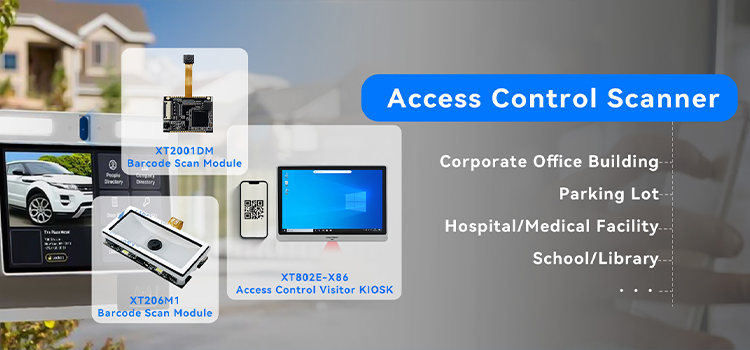
When people compare barcode scanners from the same vendor, the discussion often gets stuck on model numbers and surface-level specs. From a system or operations perspective, that’s usually the wrong way to look at it. The real differences between scanner models show up in where and how they are meant to be used, not just in resolution or supported symbologies.
XTIOT’s barcode scanning devices are a good example of this. While the model names differ, the core positioning of each device is tied closely to real deployment pain points.
Some XTIOT models are clearly positioned for embedded and OEM applications. These scanners are designed to disappear into larger systems such as POS terminals, kiosks, vending machines, or access control devices. The main challenges here are mechanical space, interface compatibility, and predictable behavior across production batches. Embedded-focused models prioritize compact size, stable decoding firmware, and support for multiple serial interfaces so the same scanner can be reused across different hardware platforms without major redesign.
Other models are built for fixed or desktop use, common in production lines, electronics traceability, or retail counters. The pain point in these environments is not whether the scanner can read a code, but whether it can do so continuously and consistently. These devices are tuned for stable optical performance, fast response times, and tolerance for damaged or low-contrast barcodes. The difference between models here often comes down to field of view, depth of field, and how well the scanner handles reflections or uneven surfaces.
XTIOT also positions certain models specifically for retail-facing use cases, such as price checking or self-service scanning. Compared to handheld or camera-based solutions, these devices focus on fast first-read success and long daily operating hours. Android-based models integrate dedicated scan engines and stable network connectivity to POS or pricing systems. The practical benefit is reduced staff intervention and fewer pricing disputes, driven by reliable scanning rather than UI features.
On the mobility side, rugged Android PDA models target warehouses, logistics, and asset tracking. Here, the core differences between models relate to durability level, battery capacity, scanning engine performance, and optional technologies like NFC. The key pain points—device failures, missed scans, and mid-shift battery loss—are addressed through rugged housings, optimized power management, and industrial-grade scanning and NFC components.
What’s consistent across XTIOT’s lineup is that different models are not just incremental upgrades. They are optimized around different operational constraints. Choosing between them is less about “higher or lower specs” and more about matching the scanner to the environment it will live in.
For integrators and end users, this kind of positioning reduces long-term friction. A scanner selected for the right context is easier to integrate, requires less support, and delivers more predictable performance over time.
From a technical perspective, the core value of XTIOT’s model differentiation is clarity. Each device category reflects a specific set of trade-offs—size, performance, durability, or mobility—rather than trying to be a one-size-fits-all solution. In real deployments, that clarity is often what leads to better outcomes than chasing the most feature-heavy model on paper.


