Shenzhen Xingtong IOT Technology Co., Ltd.
Barcode Scanner Manufacturer with development & Invention ability

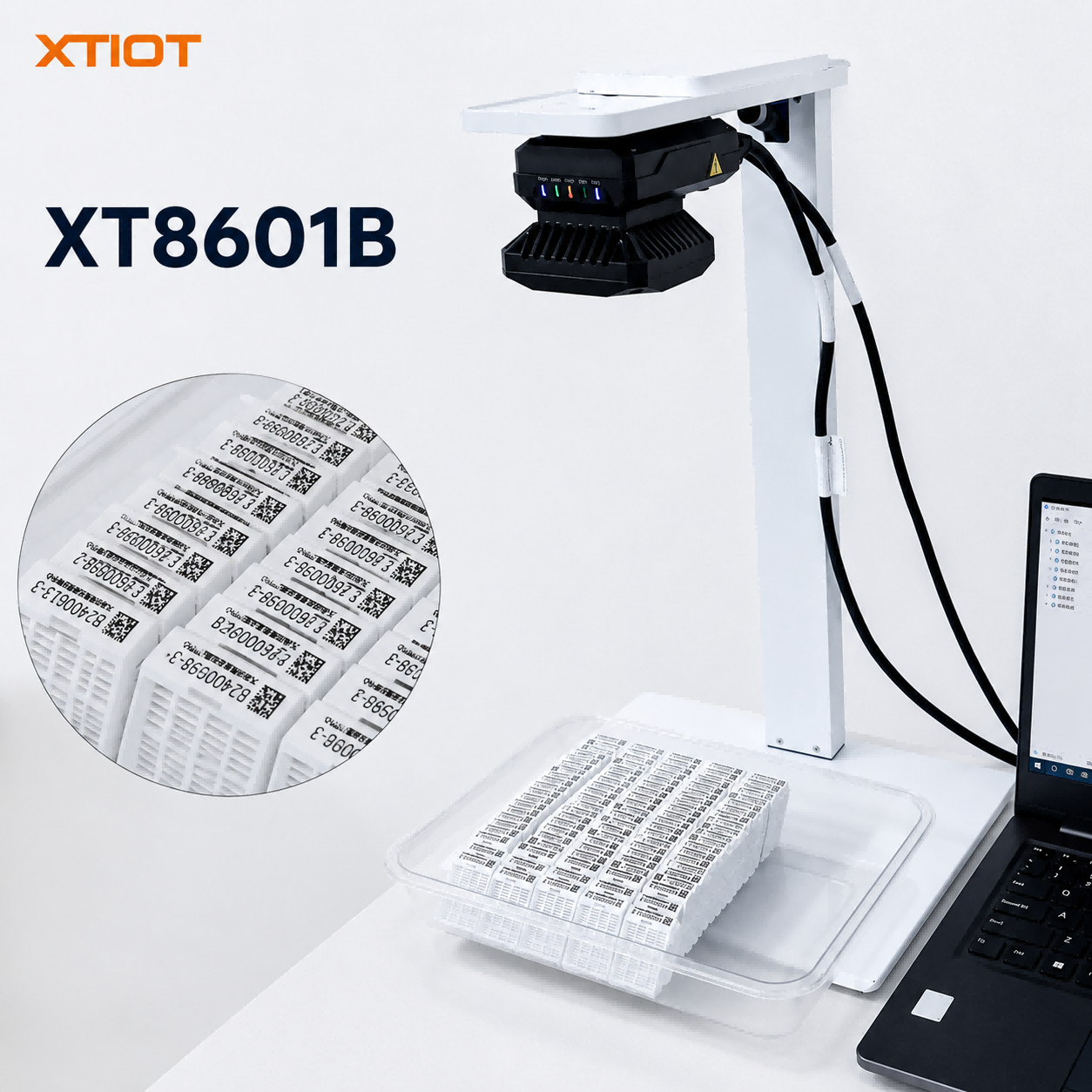
In digital pathology laboratories, Data Matrix codes on tissue cassettes are essential for specimen identification and traceability. However, the biggest challenge is often not the barcode itself—it is the condition of the cassette surface.
Many laboratories expect every cassette to have a clean, high-contrast laser-marked code. In reality, that is rarely the case.
Some cassettes have:
Uneven laser engraving depth
Plastic surface reflections under bright lighting
Small scratches after handling
Residue from embedding or laboratory processing
Even though the code is technically correct, these factors can make decoding inconsistent if the imaging system cannot capture enough usable detail.
Why Standard Barcode Readers Sometimes Struggle
Traditional barcode readers are designed for printed labels with strong contrast.
A tissue cassette is different.
The Data Matrix code is usually laser marked directly onto the plastic. Instead of reading black and white patterns, the scanner must distinguish very small differences in texture and brightness.
If the imaging resolution is insufficient or the illumination is not optimized, the camera may lose part of the code, resulting in repeated scan attempts or manual intervention.
For laboratories processing hundreds or thousands of specimens every day, even a small reduction in first-pass read rate can slow the entire workflow.
Imaging Quality Matters More Than Scan Speed
Many users focus on decoding speed.
In pathology applications, image quality is often the more important factor.
A high-resolution industrial imaging scanner captures more detail from:
Laser-etched Data Matrix codes
Low-contrast markings
Slightly worn cassette surfaces
Small module-size symbols
This provides the decoding algorithm with better image data, improving read consistency without changing the cassette design.
A Solution for Tissue Cassette Identification
For laboratory automation and pathology systems, XTIOT XT8601B is designed for demanding industrial identification tasks.
Key advantages include:
3072 x 2048 high-resolution industrial imaging
Reliable reading of small Data Matrix codes
Suitable for laser-marked plastic surfaces
High-speed decoding for laboratory automation
TCP/IP and RS-232 communication for easy integration with LIMS, LIS, and automated laboratory equipment
Whether installed in a tissue cassette handling system, slide preparation workstation, or laboratory automation line, the scanner delivers stable barcode capture while reducing repeated scans.
When reading Data Matrix codes on tissue cassettes, the challenge is often the quality of the captured image rather than the barcode format itself.
Choosing a scanner with high-resolution imaging and optimized decoding for low-contrast industrial marks can significantly improve first-pass read rates and help laboratories maintain reliable specimen traceability throughout the pathology workflow.


