Shenzhen Xingtong IOT Technology Co., Ltd.
Barcode Scanner Manufacturer with development & Invention ability

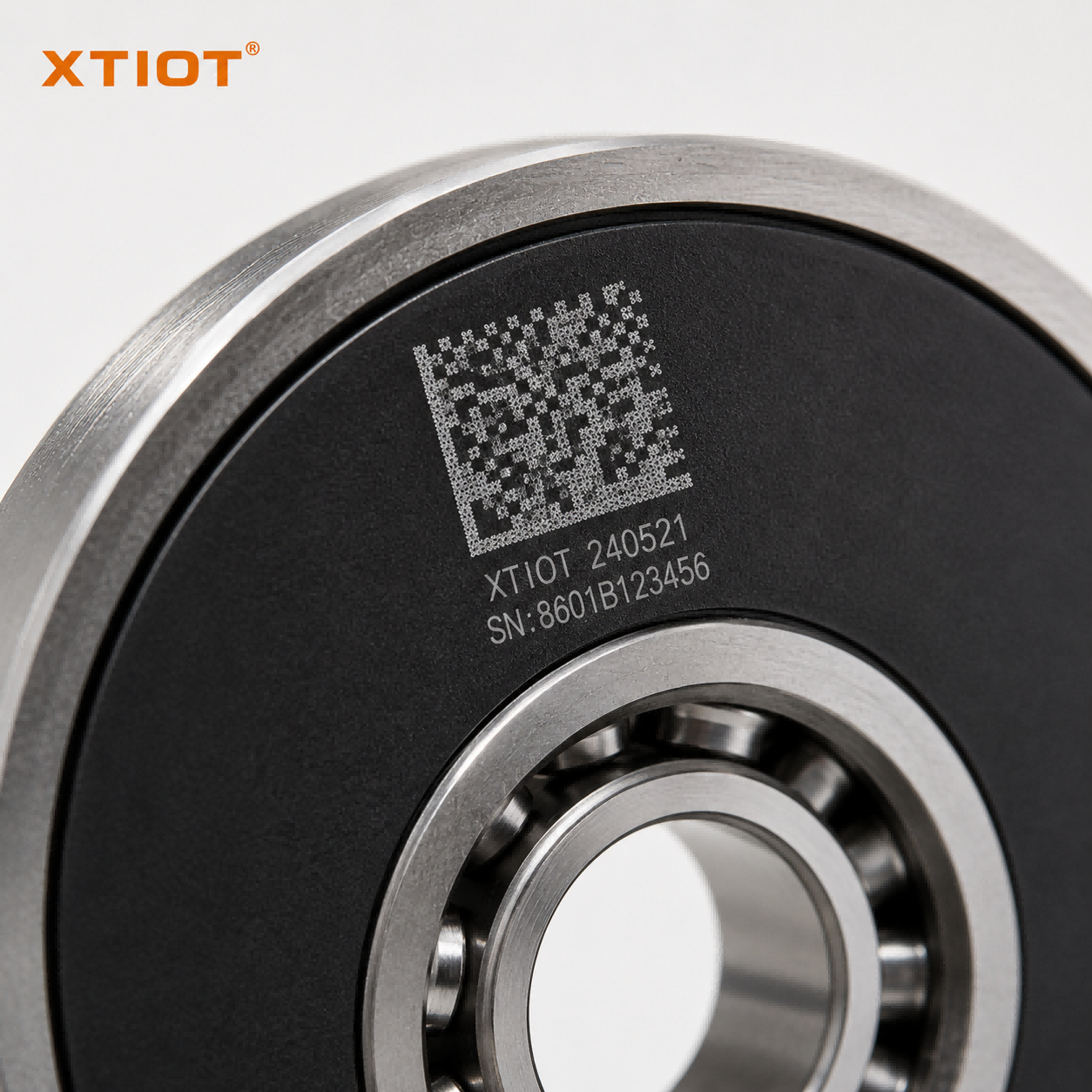
Reading Inverted Barcodes on Black Electronic Components
Black electronic housings have become increasingly common in modern manufacturing.
To improve durability, many manufacturers laser-mark white Data Matrix codes or QR Codes directly onto black plastic or anodized aluminum parts instead of applying printed labels.
The result is a clean, permanent identification mark.
However, these inverted barcodes often become a challenge for automated barcode readers.
The Challenge: The Barcode Is White Instead of Black
Most barcode samples used during equipment testing are black codes printed on a white label.
Production parts can be completely different.
In electronics manufacturing, barcode markings are often:
White Data Matrix codes on black plastic housings
Laser-marked white QR Codes on anodized aluminum
Permanent identification codes on dark industrial components
Although the barcode itself is correctly marked, the scanner must distinguish bright barcode cells from a dark background instead of the opposite.
Under inconsistent lighting, reflections or uneven illumination can reduce decoding reliability.
Why Production Testing Doesn't Always Reveal the Problem
Many OEM machines are tested using printed barcode labels before delivery.
After installation, the production line switches to laser-marked white codes on actual products, and read failures begin to appear.
The scanner is not reading the same type of barcode it was tested with.
The marking process, surface finish and material all influence image quality.
This is particularly common when scanning:
Black plastic electronic housings
Industrial control modules
Automotive electronic components
PCB carrier fixtures
Engineering Considerations
Before changing the barcode design, manufacturers should evaluate the imaging conditions.
Recommended practices include:
Test using actual production parts instead of paper labels
Control reflections from glossy black surfaces
Maintain a stable working distance
Select an industrial scanner designed for demanding marking conditions
Testing with production samples is often more valuable than testing with ideal barcode labels.
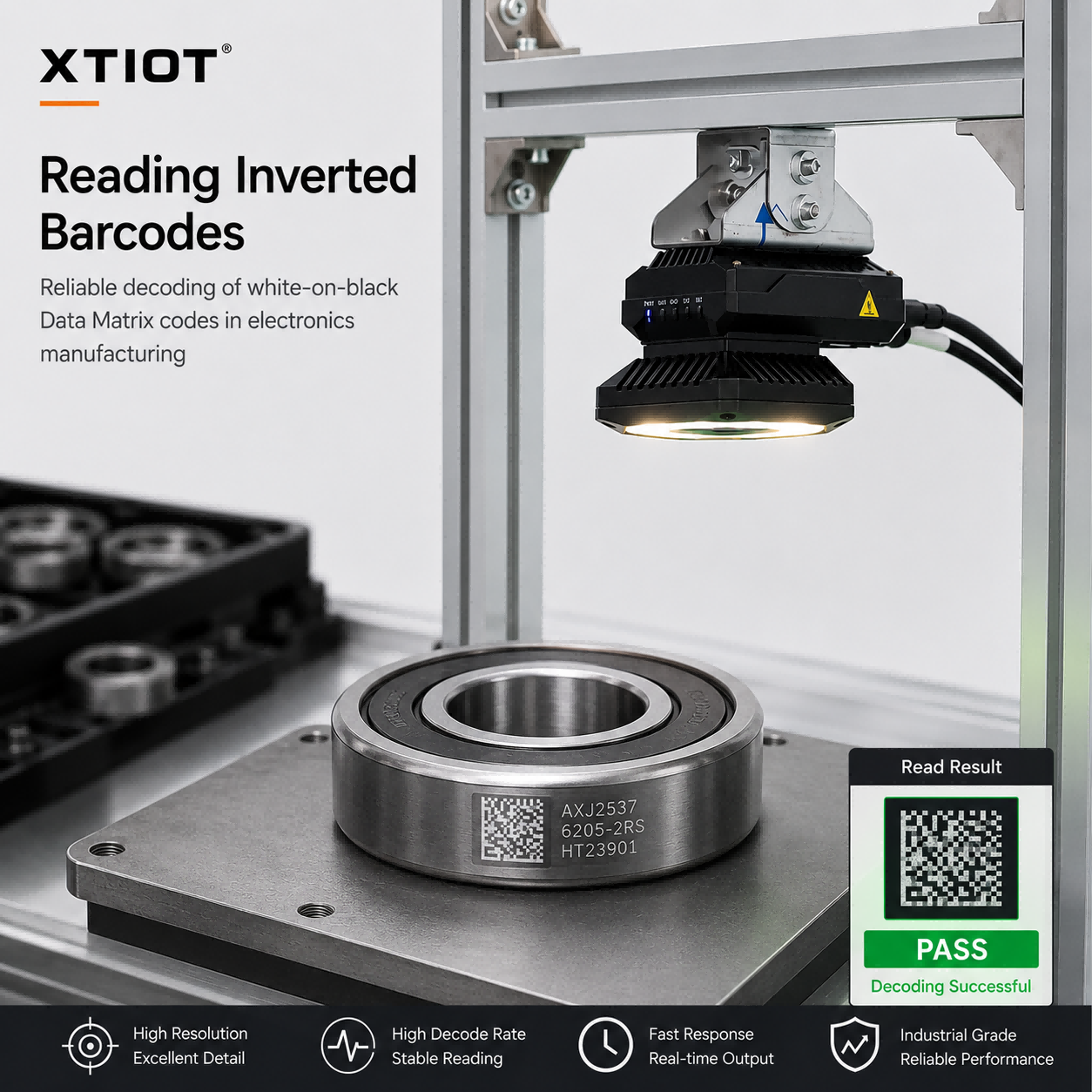
Recommended Barcode Scanner
For manufacturers reading white-on-black Data Matrix codes, laser-marked QR Codes and permanent industrial markings, the XTIOT XT8601B delivers reliable decoding in demanding production environments.
Key advantages include:
Reliable reading of inverted barcodes and laser-marked codes
High-resolution imaging for small industrial symbols
Support for Data Matrix, QR Codes and 1D barcodes
High-speed decoding for automated production lines
Industrial Ethernet and serial communication for easy system integration
Whether scanning black electronic housings, anodized aluminum parts or permanently marked industrial components, the XT8601B helps manufacturers improve first-pass read rates and reduce production interruptions caused by difficult barcode markings.


