Shenzhen Xingtong IOT Technology Co., Ltd.
Barcode Scanner Manufacturer with development & Invention ability

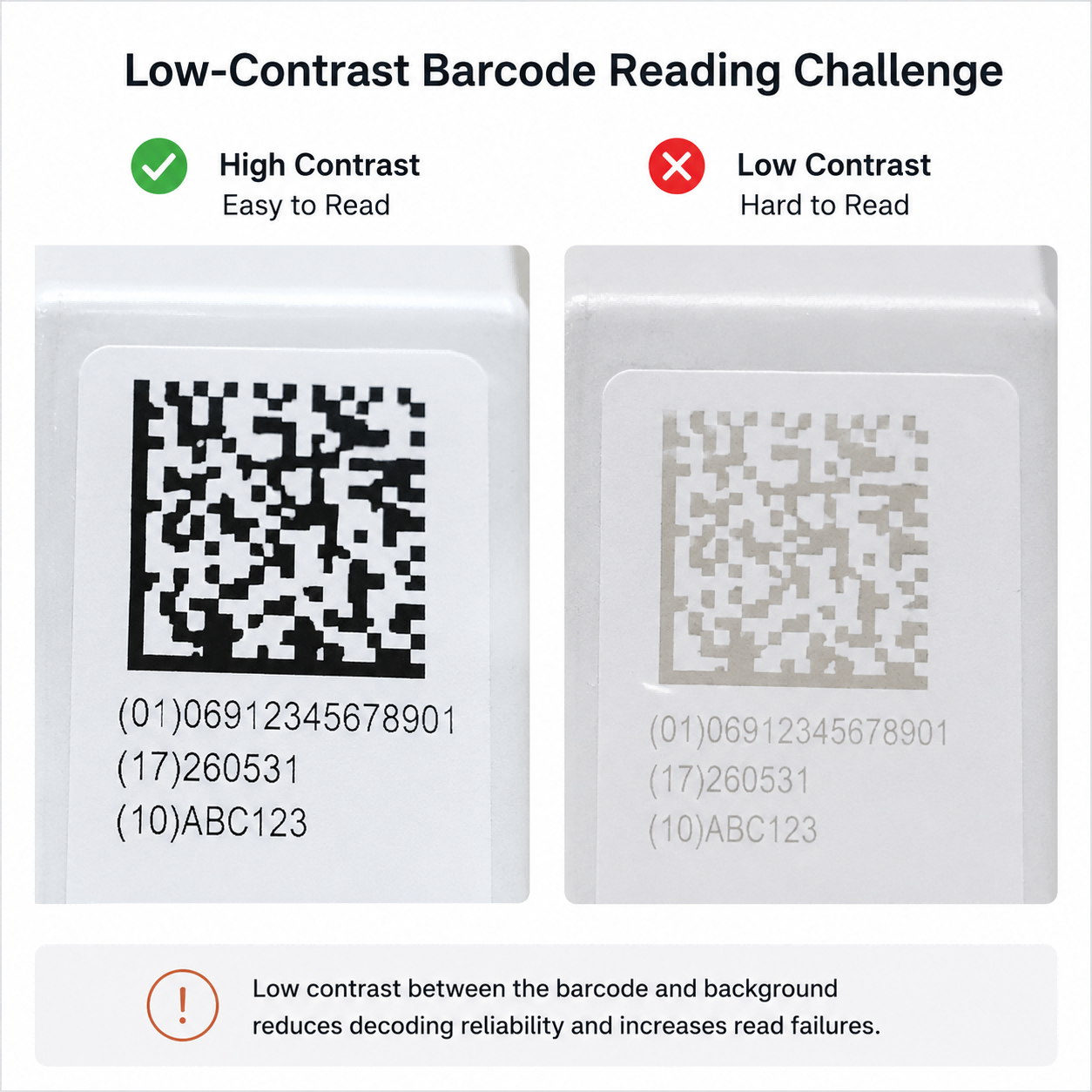
The Challenge
Many medical device manufacturers use thermal transfer printing to produce UDI labels.
At the beginning of a production run, the labels are clear and easy to read.
However, after several hours of continuous printing, operators begin to notice something unusual.
The labels still pass visual inspection, but barcode read rates start to decline.
The printer hasn't stopped working.
The barcode hasn't changed.
Only the print contrast has gradually decreased.
Why It Happens
As the ribbon and print head wear during long production runs, black bars become lighter and white spaces become less distinct.
To the human eye, the UDI label still appears normal.
But for a barcode scanner, the difference between black and white becomes too small, making barcode boundaries more difficult to identify.
This problem becomes more obvious when:
Labels are very small
Products move continuously on the production line
The scanner has only milliseconds to capture the image
Engineering Considerations
Replacing the printer is not always necessary.
Instead, manufacturers should:
Monitor ribbon quality during long production runs
Clean the print head regularly
Verify barcode quality at scheduled intervals
Use an industrial barcode scanner capable of capturing subtle grayscale differences
By identifying low-contrast labels before they interrupt production, manufacturers can reduce unnecessary downtime and avoid repeated scanning attempts.
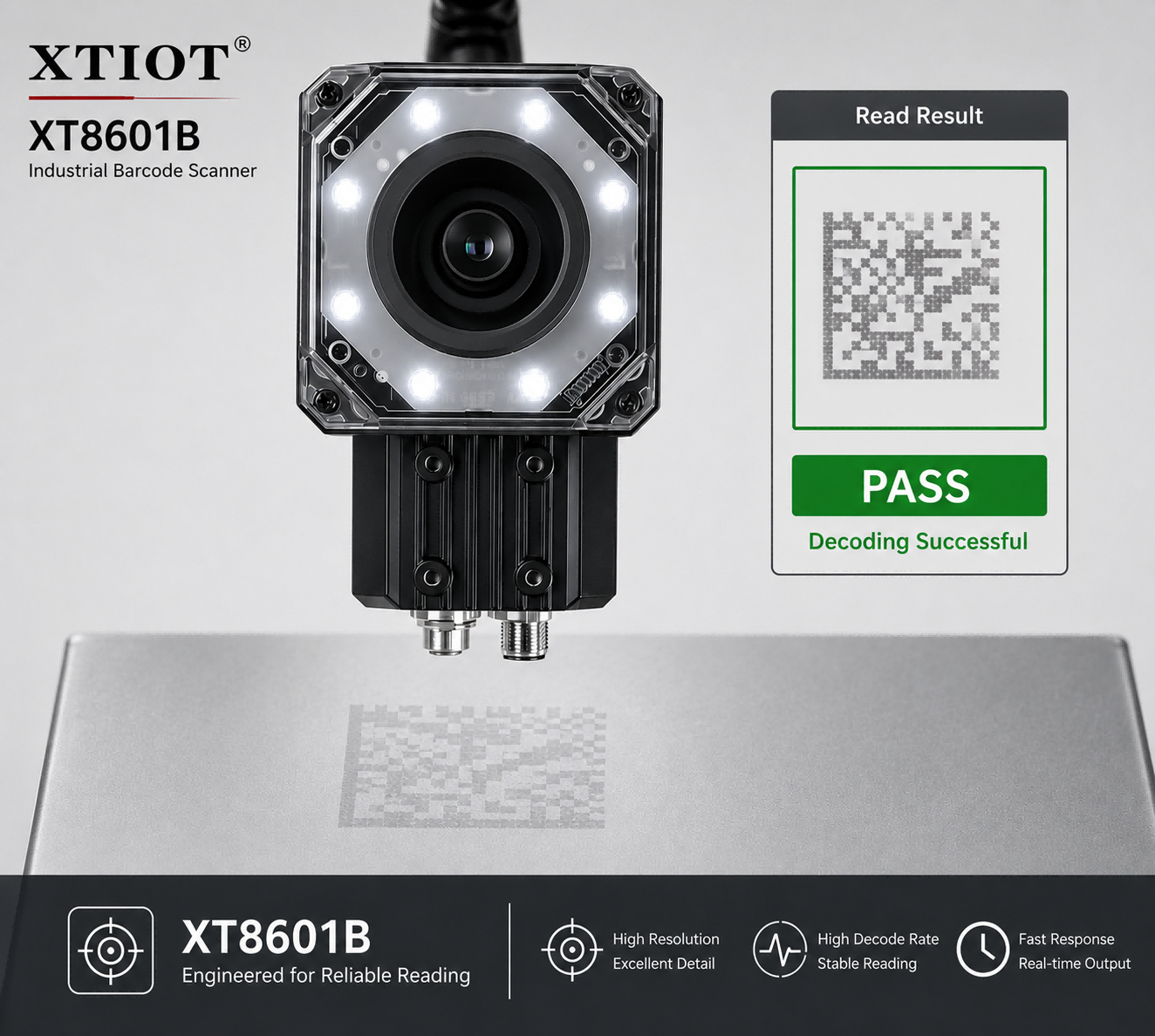
Recommended Barcode Scanner
For medical device UDI verification and traceability systems, the XTIOT XT8601B provides high-resolution industrial imaging designed for demanding production environments.
Key advantages include:
Reliable reading of low-contrast UDI labels
Support for GS1 DataMatrix, QR Codes and 1D barcodes
High-speed decoding for automated production lines
Industrial Ethernet and serial communication
Suitable for medical device manufacturing, pharmaceutical packaging and laboratory automation
When UDI labels begin to lose contrast during production, capturing more image detail becomes more important than increasing illumination. The XT8601B helps manufacturers maintain stable barcode reading throughout long production runs.


