Shenzhen Xingtong IOT Technology Co., Ltd.
Barcode Scanner Manufacturer with development & Invention ability

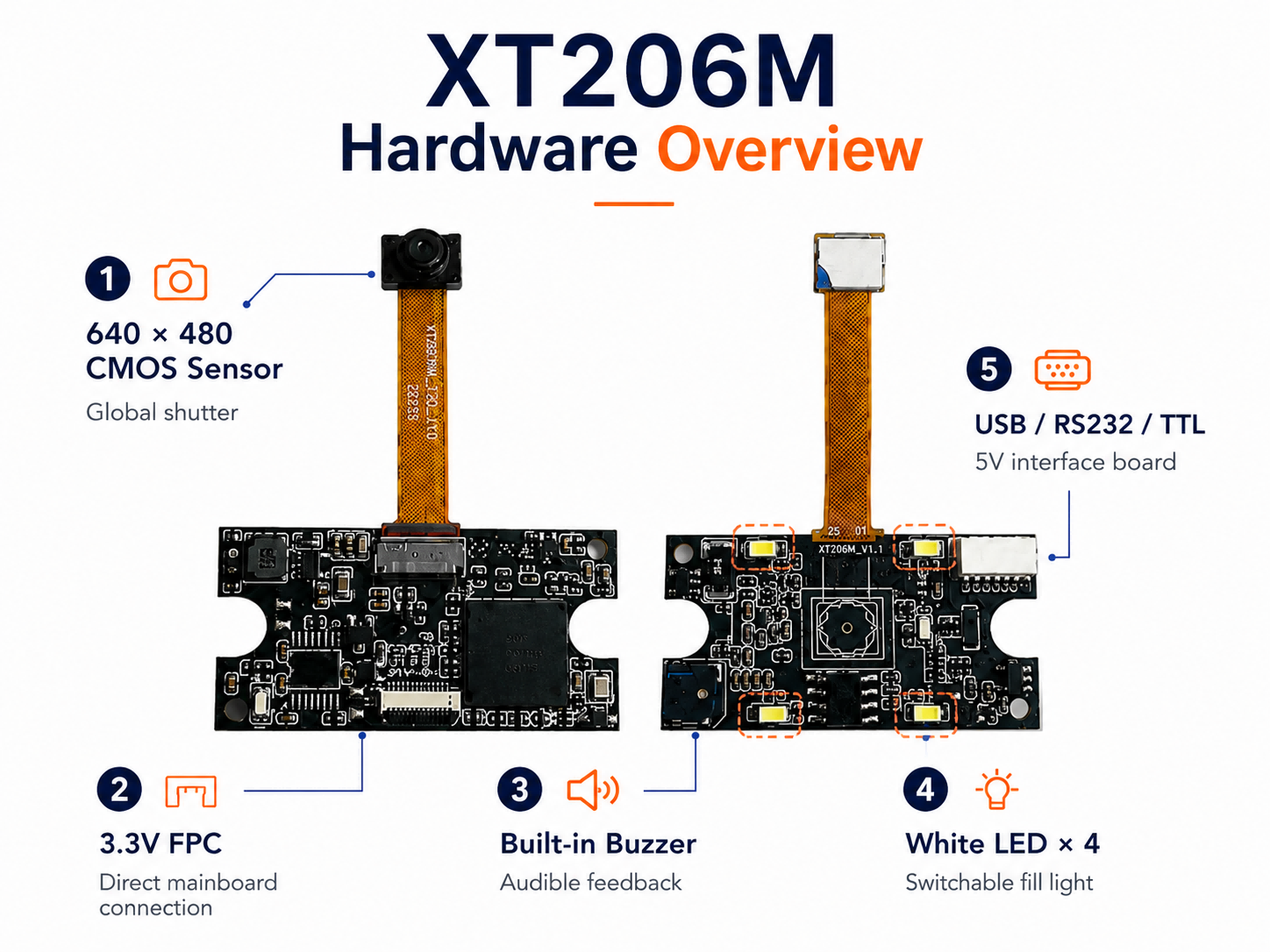
As self-service equipment becomes thinner and more compact, traditional integrated barcode scanner modules are no longer suitable for every product design.
Today, more OEM manufacturers are choosing split camera barcode scanner modules because they provide greater flexibility during hardware development while simplifying mechanical design.
Whether you're designing a self-service kiosk, payment terminal, smart locker, or medical device, a split camera architecture can make product integration much easier.
What Is a Split Camera Barcode Scanner Module?
Unlike traditional integrated scan engines, a split camera design separates the image sensor from the decoder board.
This allows engineers to install the camera exactly where the scanning window is located, while placing the decoder PCB in another position inside the device.
The result is a more flexible hardware layout without compromising scanning performance.
Why OEM Engineers Prefer Split Camera Designs
More Flexible Internal Layout
The camera and decoder board can be installed independently, making it easier to optimize the internal structure of compact devices.
This is particularly useful when available installation space is limited.
Easier Mechanical Design
Separating the camera from the main PCB gives mechanical engineers greater freedom when designing the product enclosure.
There is no need to redesign the entire device around the scanner module.
Ideal for Compact Equipment
Split camera modules are commonly integrated into:
Self-Service Kiosks
Smart Lockers
Payment Terminals
Ticketing Machines
Visitor Management Systems
Access Control Equipment
Medical Instruments
Industrial HMI Devices
These applications often have strict space limitations, making flexible installation essential.
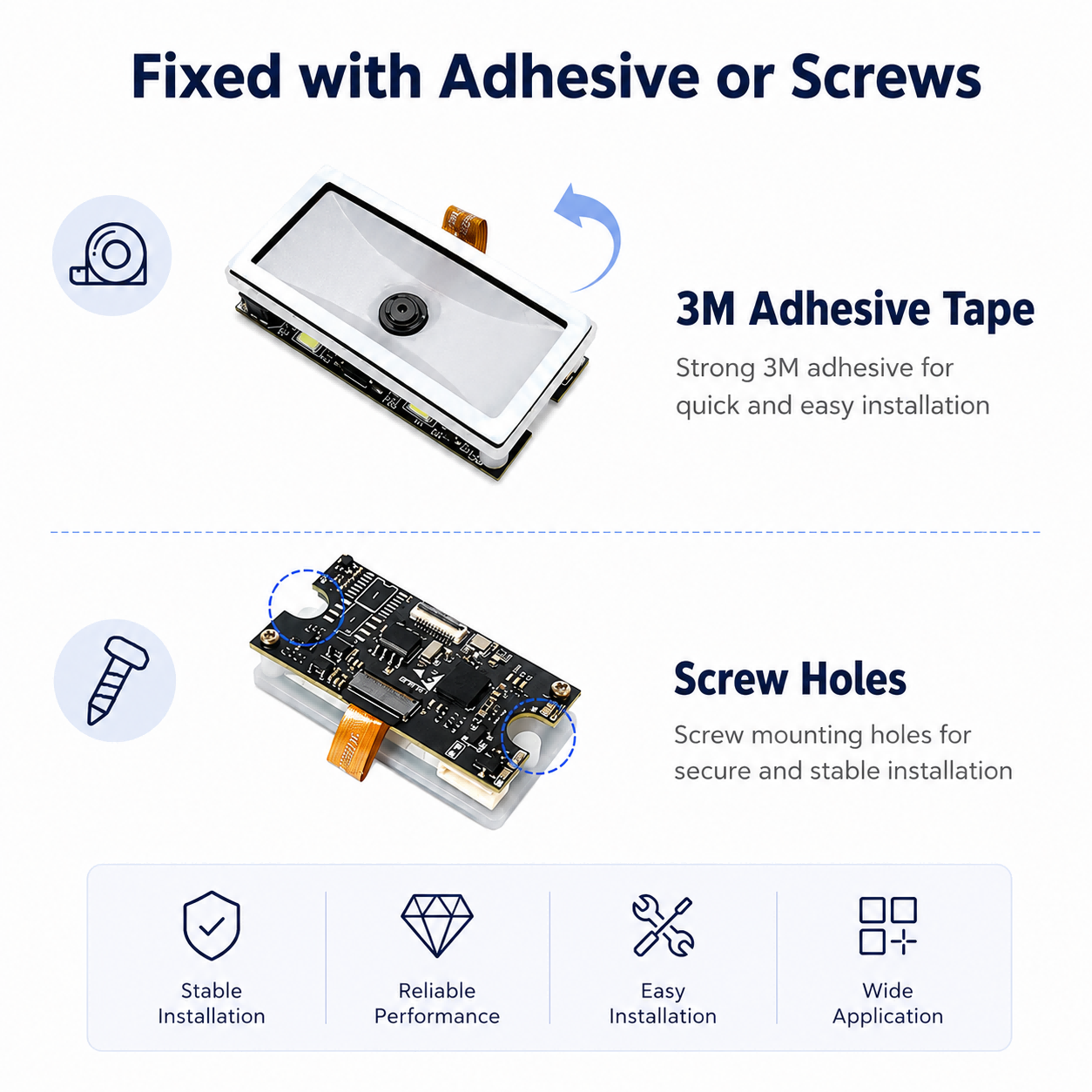
Better Support for Glass Window Installation
Many modern kiosks use a full glass or acrylic front panel.
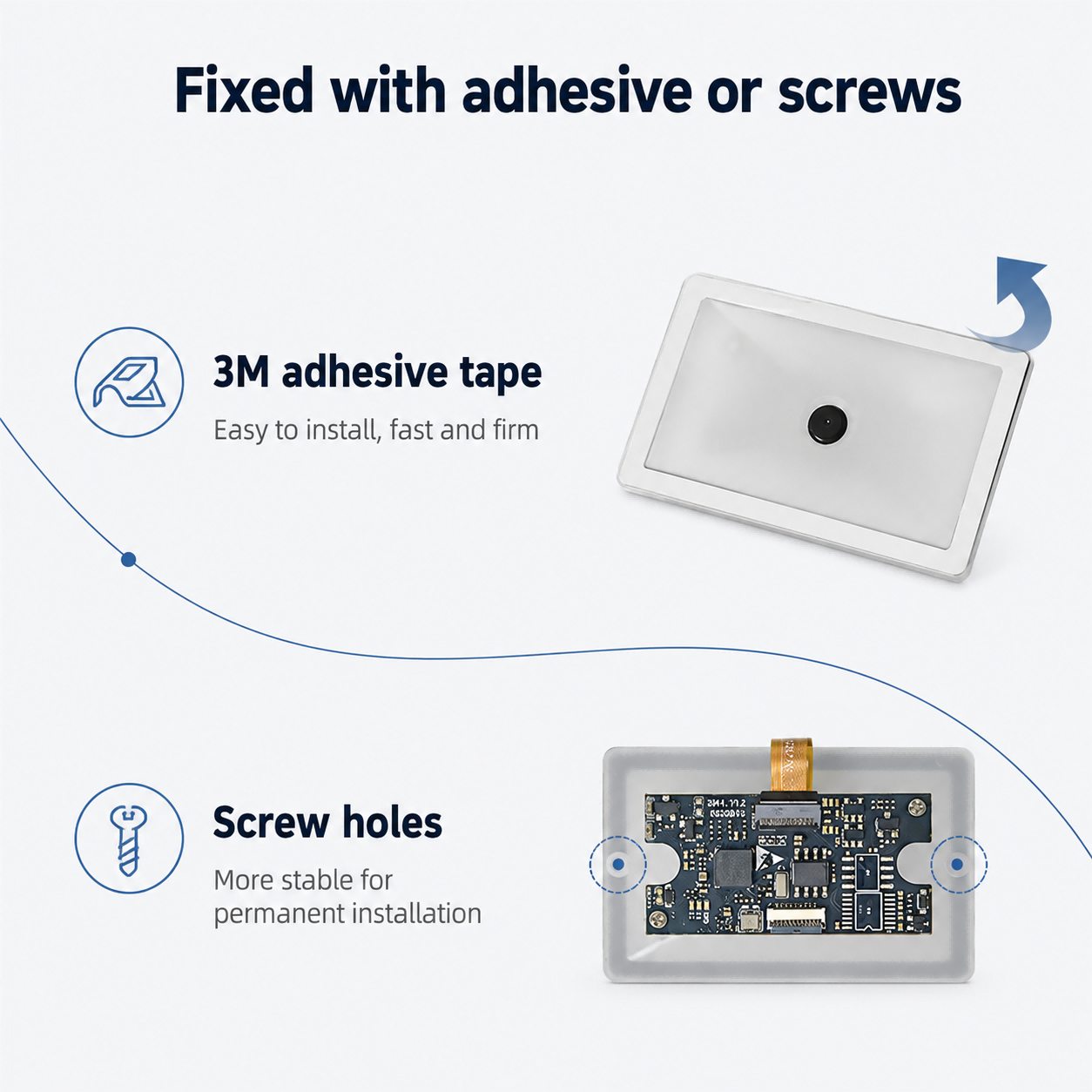
A split camera module allows the camera to be positioned directly behind the scanning window while the decoder board is mounted elsewhere inside the device.
This simplifies industrial design and improves overall appearance.
Simplifies Future Product Upgrades
Because the camera and PCB are separated, OEM manufacturers can often modify enclosure designs or internal layouts without completely redesigning the scanner installation.
This helps reduce engineering changes during product upgrades.
Other Features Engineers Should Consider
Besides the split camera architecture, an embedded barcode scanner module should also provide:
High-resolution image sensor
USB, TTL and RS232 interfaces
Multiple trigger modes
Mobile screen barcode reading
Compact dimensions
Wide barcode compatibility
Stable long-term supply
These features help ensure compatibility with a wide range of embedded applications.
Typical OEM Applications
Split camera barcode scanner modules are widely used in:
Self-Service Payment Kiosks
Smart Parcel Lockers
Retail Price Checkers
Self-Checkout Systems
Ticket Validation Equipment
Hospital Self-Service Terminals
Medical Diagnostic Devices
Industrial Automation Equipment
As more equipment manufacturers pursue slimmer products and simplified assembly, split camera designs continue to gain popularity.
Frequently Asked Questions
Why choose a split camera module instead of an integrated scanner?
A split camera design offers greater flexibility during mechanical design, making it easier to integrate the scanner into compact equipment.
Is a split camera module suitable for glass window installation?
Yes. The camera can be positioned directly behind the glass while the decoder board is installed separately inside the device.
Which applications benefit most from split camera designs?
Applications with limited installation space, such as kiosks, payment terminals, smart lockers, medical devices, and access control systems.
Does a split camera design affect scanning performance?
No. The split architecture changes the installation method, while scanning performance depends on the sensor, optics, and decoding algorithm.
Conclusion
For OEM manufacturers, selecting an embedded barcode scanner is about more than decoding performance.
A split camera barcode scanner module provides greater installation flexibility, simplifies mechanical design, supports modern industrial styling, and helps accelerate product development.
As self-service equipment continues to become smaller and more integrated, split camera architecture is becoming an increasingly practical solution for hardware engineers.


