Shenzhen Xingtong IOT Technology Co., Ltd.
Barcode Scanner Manufacturer with development & Invention ability

Tired of Shipping Errors? How Automated Barcode Verification Saves Millions for Mass Production
来源:
|
Arthuor: XTIOT Barcode Scanner
|
Time: 2026-01-29
|
110 Reading
|
🔊 点击朗读正文
❚❚
▶
|
分享到:
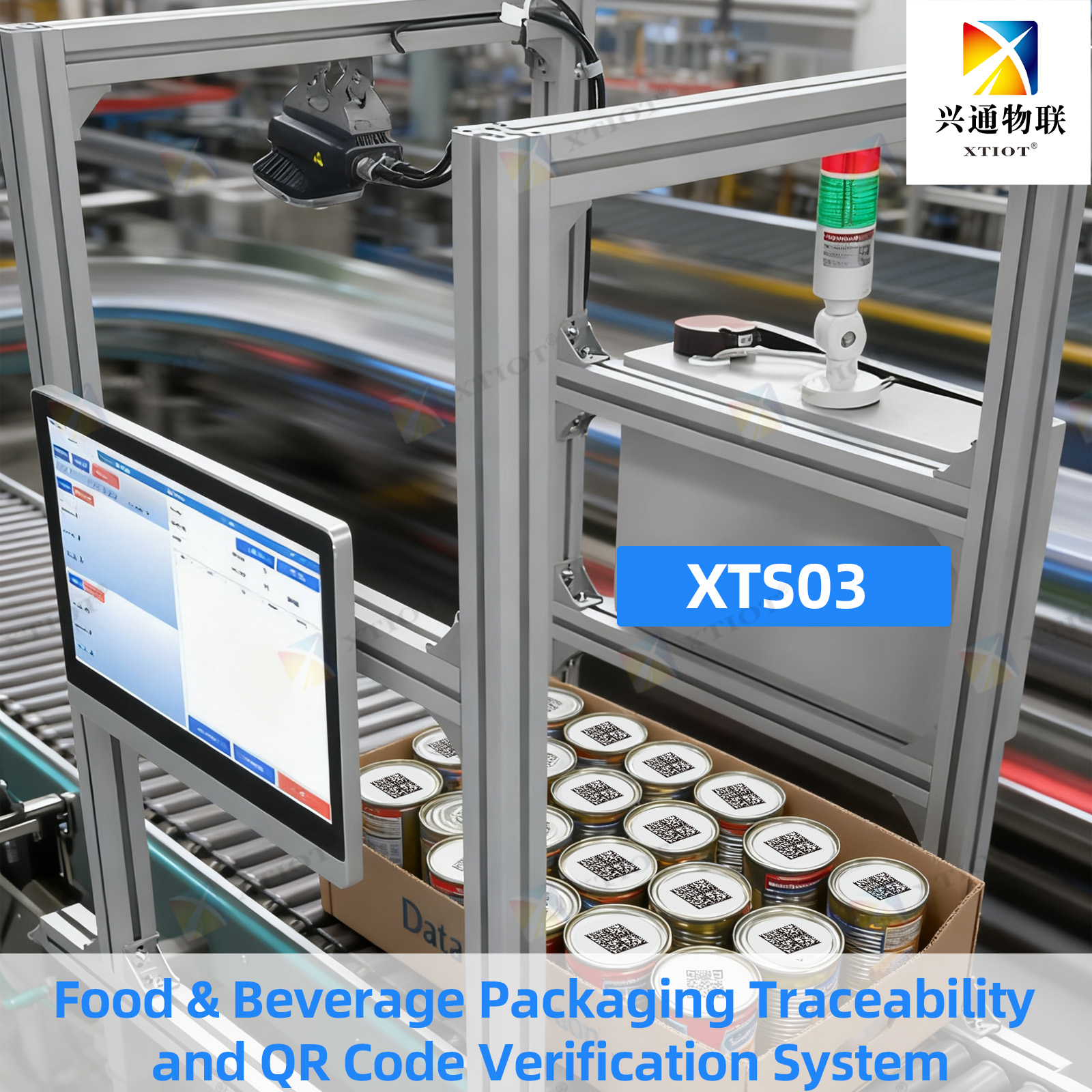
| # Tired of Shipping Errors? How Automated Barcode Verification Saves Millions for Mass Production Hey r/industrialengineering, r/logistics, and r/manufacturing. Let's talk about a chronic pain point in high-volume shipping: **barcode errors**. A single misprinted or duplicate barcode in a batch of 10,000 units can trigger a chain reaction of failures—failed warehouse scans, shipping delays, incorrect shipments, and massive chargebacks from retailers like Amazon or Walmart. Manual spot-checking is hopelessly inefficient for volumes exceeding a few hundred items per hour. The human eye fatigues, and error rates climb. So, how do you achieve true **Six Sigma-level accuracy** in barcode output at scale?
## The Core Problem: Why "Close Enough" Isn't Enough Barcodes (Code 128, Data Matrix, QR) are not just pretty patterns. They are **data carriers**. A "good enough" scan for a store clerk is not sufficient for industrial logistics. Scanners in automated sortation systems, robotic picking arms, and high-speed conveyor lines have zero tolerance for errors. They need **perfectly printed, 100% unique, and 100% accurate** codes. The main failure points are: * **Duplicate Codes :** Two different items share the same serial number. This corrupts inventory data and can cause two orders to be fulfilled for one SKU. * **Missing Codes :** An item has no barcode at all, halting the entire line for manual intervention. * **Unreadable Codes:** Poor print quality, smudging, or incorrect quiet zones render the code useless to downstream systems. ## The Technical Solution: In-Line Barcode Verification & Comparison System Here’s a simplified technical workflow of our system integrated into a packaging or production line: 1. **Image Acquisition:** A high-resolution industrial camera, triggered by a photoelectric sensor, captures a crisp image of each barcode **in motion** (at line speeds of up to 5 meters/second). 2. **Decoding & Grading:** The core software performs two critical tasks in milliseconds: * **Decode:** It reads the data encoded within the barcode (e.g., `SN20240527-00001`). * **Graded:** It analyzes the **print quality** against international standards (like ISO/IEC 15415 for 2D codes). It assigns a grade (A-F) based on parameters like symbol contrast, modulation, and decode capability. 3. **The Critical Comparison Check:** This is the key to preventing duplicates. The system checks the *just-read* code against a **self-maintained, in-memory database** of all codes read in the current production batch or shift. * **Pass:** If the code is unique, high-quality, and matches the expected data format, the item proceeds. * **Fail:** If the code is a **duplicate**, ungraded (quality F), or contains invalid data, the system instantly sends a rejection signal to a diverting mechanism (e.g., a pusher or air blast). 4. **Data Logging & Traceability:** Every single item is logged with its code, timestamp, quality grade, and pass/fail status. This creates a complete digital twin of your physical output, essential for traceability and compliance reports. ## Tangible Benefits & Measurable Outcomes (The "So What?") Forget vague promises. Here’s what this level of control translates to in operational and financial terms, based on deployments in electronics and CPG: * **Error Reduction to Near-Zero:** Systems can achieve a **defect rate of less than 10 PPM (Parts Per Million)** for barcode-related errors, effectively eliminating chargebacks from major retailers who penalize for incorrect shipments. * **Labor Productivity Gain:** Eliminates the need for 1-2 dedicated operators per line for manual checking. One supervisor can now monitor multiple lines via a central dashboard. This typically reallocates **over 80 person-hours per week** per line to higher-value tasks. * **Line Efficiency Uptick:** By preventing defective items from proceeding downstream, you avoid line stoppages. Clients report a **3-8% increase in Overall Equipment Effectiveness (OEE)** by eliminating these micro-stoppages and rework queues. * **ROI Under 12 Months:** The cost of a system is often offset in **6-12 months** purely by the reduction in chargeback penalties, labor savings, and prevented waste from mis-shipped products. ## Key Technical Considerations for Implementation If you're evaluating such a system, here are the hard technical questions to ask: * **Integration Protocol:** Does it offer standard industrial communication protocols (MQTT, OPC UA, REST API) to feed data directly into your MES or WMS, or can it only provide simple I/O signals? * **Lighting & Optics:** How does it handle challenging surfaces (reflective, curved, dark)? The robustness of the lighting solution is often more critical than the camera megapixels. * **Database & Speed:** How many unique codes can the in-memory comparison database hold in real-time? Can it truly keep up with your peak line speed without becoming a bottleneck? * **Rejection Mechanism Integration:** The software is only half the solution. You need a reliable physical method (a pusher, flap, or reject bin) to remove the faulty item without disrupting the flow. ## Conclusion In mass production, you cannot inspect quality into a product at the end; you must build it into the process. **Automated barcode verification is a classic example of "poka-yoke" (error-proofing) for the digital age.** It moves barcode management from a hopeful manual check to a guaranteed, data-driven part of the production workflow. The value isn't just in the fancy camera or software—it's in the **complete elimination of a high-risk, low-reliability manual process** and its replacement with a silent, precise, and tireless digital guardian for your product flow. **For the engineers here:** What other inline verification processes have you seen successfully implemented to prevent costly downstream errors? Have you tackled the barcode duplication problem with a different technical approach? *(Note: I work with XTIOT, and we build these systems. The data points shared are aggregated from actual client performance reports. I'm happy to dive deeper into specific technical aspects in the comments.)* |
Related Products:


Shenzhen Xingtong IOT Technology Co., Ltd.
COPYRIGHT © 版权所有:深圳市兴通物联科技有限公司 粤ICP备13044521号-1

